
SMILE Eye Surgery – Flapless, Bladeless Laser Vision Correction
SMILE is a minimally invasive, one-step procedure that corrects nearsightedness and astigmatism without the need for a corneal flap. It’s faster, quieter, and designed for an active lifestyle
What is SMILE Surgery? How is it Different from LASIK?
Small Incision Lenticule Extraction (SMILE) laser eye surgery is a cutting-edge treatment for vision problems. SMILE is a minimally invasive procedure that helps to correct myopia (nearsightedness). It’s also effective in treating minor astigmatism up to 5 diopters in severity. In contrast, traditional LASIK surgery involves making two large flaps in the cornea. RELEX SMILE is a new type of vision correction that uses a laser to create a small, pocket-like incision in the cornea through which the natural lens is removed. This method is much less invasive than LASIK and has a quicker recovery time. It is also considered to be more precise, which results in fewer side effects and less chance of regression.
RELEX SMILE is an excellent option for those who are not candidates for LASIK due to thin corneas or other factors. It is also a good choice for those who have large pupils, as there is less risk of developing halos or glare around bright lights. If you are considering RELEX SMILE laser eye surgery, it’s important to find an experienced and reputable surgeon who can perform the procedure safely and effectively.
Book Free Consultation
Book Appointment or Video Consultation online with top eye doctors for SMILE eye surgery

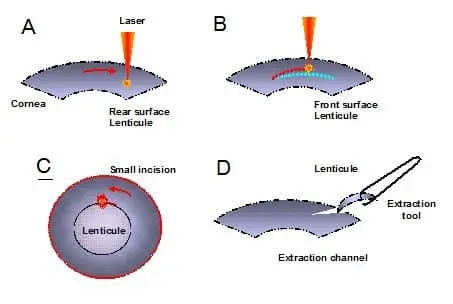
How SMILE Eye Surgery Works — Step by Step
The SMILE treatment is a one-of-a-kind procedure that does not require the creation of a flap. A lenticule is made within an intact cornea using this method.
- Creating the Lenticule- A highly advanced femtosecond laser is used to create a thin, lens-shaped layer of tissue (called a lenticule) inside your cornea. This step is completely blade-free and extremely precise.
- Making a Tiny Incision- A small 2–4 mm incision is created on the surface of the cornea. Unlike traditional procedures, no flap is made—making SMILE a truly flapless technique.
- Removing the Lenticule- The surgeon gently removes the lenticule through the small incision. This reshapes the cornea naturally, correcting your vision.
The surgery takes 10–15 minutes for both eyes. You remain awake, but numbing drops ensure a painless experience. You may feel slight pressure for a few seconds Your vision starts improving within 24 hours.
Why Patients Are Choosing SMILE Over Traditional LASIK
SMILE has several advantages over traditional LASIK surgery when it comes to correcting vision. SMILE eye treatment is a wonderful substitute for the more well-known LASIK and LASEK operations, which are suited to people who have or don’t have astigmatism.
Some of the advantages of SMILE Eye surgery are:
- As SMILE is a less invasive laser eye surgery, it can be done to a wider range of people, even those who were told that they are unable to undergo other types of LASIK surgery.
- You are less likely to get dry eyes than you would after LASIK surgery due to the lack of a healing flap.
- Patients should anticipate to recover rapidly and feel less discomfort than they would with LASIK due to the lack of a flap.
- Eyesight often improves by 80 percent within the first few hours after SMILE eye surgery, with maximal improvement occurring in a few weeks.

Why SMILE Eye Surgery?
Keep in mind that each technique has advantages and disadvantages. An ophthalmologist must examine a patient to determine which treatment is best for him or her.
| Trans PRK | Contoura Vision | LASIK | SMILE | |
|---|---|---|---|---|
| Cost (INR) | 50,000 – 75,000 | 95,000 – 1,05,000 | 80,000 – 1,00,000 | 80,000 – 95,000 |
| Bladeless | ||||
| Quality of Vision | ||||
| Safety | ||||
| Painless | ||||
| Post Surgery Dryness | ||||
| Tissue Saving & Corneal Strength | ||||
| Recovery | ||||
| Re-treatment | ||||
| Range of Correction | ||||
| Eye Movement tracking | ||||
| Visual Axis Treatment | ||||
| Corneal Irregularities Correction | ||||
| WOW Effect | ||||
| Retreatment |

SMILE Surgery Risks
There are certain side effects that people may experience after LASIK surgery. These are usually temporary. They include:


SMILE Surgery Aftercare
After smile eye surgery, there isn’t much follow-up treatment. The tissue’s physical recovery takes around 10 to 15 days. Patients can resume their usual routines within 2-3 weeks, including swimming and outdoor activities. Here are some of the aftersmile surgery precautions:

Some of the aftercare tips for SMILE eye surgery are:
- Wear sunglasses to protect your eyes from wind, dust, and other irritants.
- You may experience some tearing and sensitivity to light. These should improve within a week or so.
- Your doctor will likely prescribe eyedrops to help with healing and reduce inflammation and irritation.
- Sleep with your head elevated for the first few nights after surgery, to reduce swelling.
- Avoid rubbing or putting pressure on your eyes for at least four weeks after surgery.
- Follow your doctor’s instructions and appointments. Doing so will help ensure a successful outcome.
SMILE Surgery Cost
The SMILE technique is a popular treatment. It’s an elective surgery that aids patients in getting rid of their glasses or contact lenses. The surgery’s cost is determined by a variety of factors, including the method employed, the severity of your vision problem, and so on.
The Eye Mantra Hospital is one of India’s most well-known and reputable eye hospitals. SMILE surgery is available at a reasonable price at the Eye Mantra Hospital. The cost of SMILE eye surgery starts from Rs. 60,000 per eye. Although the operation costs a lot of money at first, it is a onetime investment that will save you from the burden of wearing glasses or contact lenses for the rest of your life.
| Procedure | Recovery Time | Procedure Type | Suitability (High Power / Thin Cornea) | Key Benefit | Price/Eye (₹) |
|---|---|---|---|---|---|
| LASIK | Slow | Blade Flap | Basic technology | 10,000 | |
| PRK LASIK | Very Slow | Flapless | Safe, flapless procedure for thin corneas | 12,000 | |
| Contoura Vision | Slow | Blade Flap | Sharper and personalized vision correction | 25,000 | |
| EPI Contoura | Very Slow | Flapless | Flapless Contoura for high power or thin corneas | 30,000 | |
| TransPRK | Fast | Flapless | 100% touchless and safer than traditional LASIK | 30,000 | |
| SmartSurf LASIK | Very Fast | Flapless | Touchless, painless, and fast healing | 37,500 | |
| Femto LASIK | Next day | Laser Flap | Laser flap with high accuracy and quick recovery | 47,500 | |
| Custom Eyes with Foresight Pro | Very Fast | Flapless | AI-guided precision with HD clarity | 47,500 | |
| Wavelight Innoveyes | Fast | Blade Flap / Flapless | Premium laser with ray tracing | 70,000 | |
| SMILE / SILK | Fast | Flapless | Advanced lenticule-based correction | 60,000 | |
| CLEAR NEO | Very Fast | Flapless | Most advanced, painless and fastest recovery | 60,000 |
Best Eye Hospital For SMILE Eye Surgery
SMILE eye surgery is one of the most advanced vision correction procedures—but your results depend heavily on where you get it done.
This is not just about the technology. It’s about the experience of the surgeon, precision of the equipment, and quality of care before and after surgery.
At EyeMantra, we combine all three to give you safe, accurate, and long-lasting results.
- Latest ZEISS SMILE technology for maximum precision
- Experienced surgeons with thousands of successful procedures
- Strict safety protocols and advanced diagnostic screening
- Personalized treatment plans for every patient
- Complete pre- and post-surgery care under one roof
Book your free SMILE consultation today and find out if you’re a perfect candidate.


Top SMILE Eye Surgeons in Delhi
At Eyemantra, we pride ourselves on having some of the best SMILE eye surgeons in the world. We believe that everyone deserves to have the best possible vision, and our surgeons are dedicated to providing outstanding care to each and every one of our patients.

Cataract, Retina, Glaucoma, LASIK
Cataract, Cornea
Cataract, Squint, Oculoplastic
Cataract, Retina, Glaucoma
Who is Eligible for SMILE Eye Surgery?
SMILE eye surgery is ideal for people who want a safe, flapless alternative to traditional LASIK—especially those looking for faster recovery and minimal dryness.
You may be a good candidate for SMILE if you meet the following criteria:
Basic Eligibility Criteria
- You are 18 years or older
- Your vision has been stable for at least 1 year
- You have myopia (nearsightedness)
- You have astigmatism (in many cases)
- Your cornea is healthy and suitable for laser correction
SMILE is Especially Suitable If You:
- Experience dry eyes or want to avoid worsening dryness
- Have a thin cornea (where flap-based procedures may not be ideal)
- Live an active lifestyle (sports, gym, outdoor activities)
- Use screens for long hours and want a more stable solution
Even if you match the above criteria, your final eligibility is confirmed only after a comprehensive eye examination, including corneal thickness, eye power, and overall eye health.
Advanced Facilities for SMILE Surgery
Frequently Asked Question's
Is SMILE better than LASIK?
While both procedures offer excellent visual outcomes, SMILE is considered more advanced because it is “flapless.” This preserves more corneal nerve density, potentially reducing the risk of post-operative dry eye and eliminating risks associated with flap complications.
What is the recovery time for SMILE laser eye surgery?
Most patients recover within 24–48 hours and resume normal activities within a few days.
Can SMILE surgery fix astigmatism?
Yes, SMILE is FDA-approved to treat nearsightedness (myopia) and high levels of astigmatism, providing the same precision as other laser platforms.
Is SMILE surgery painful?
No, the procedure is painless. Numbing drops are used, and patients may feel only slight pressure.
Who is eligible for SMILE surgery?
People with myopia, astigmatism, stable vision, and healthy corneas are good candidates.
